
How AI Can Make the Office Meaningful
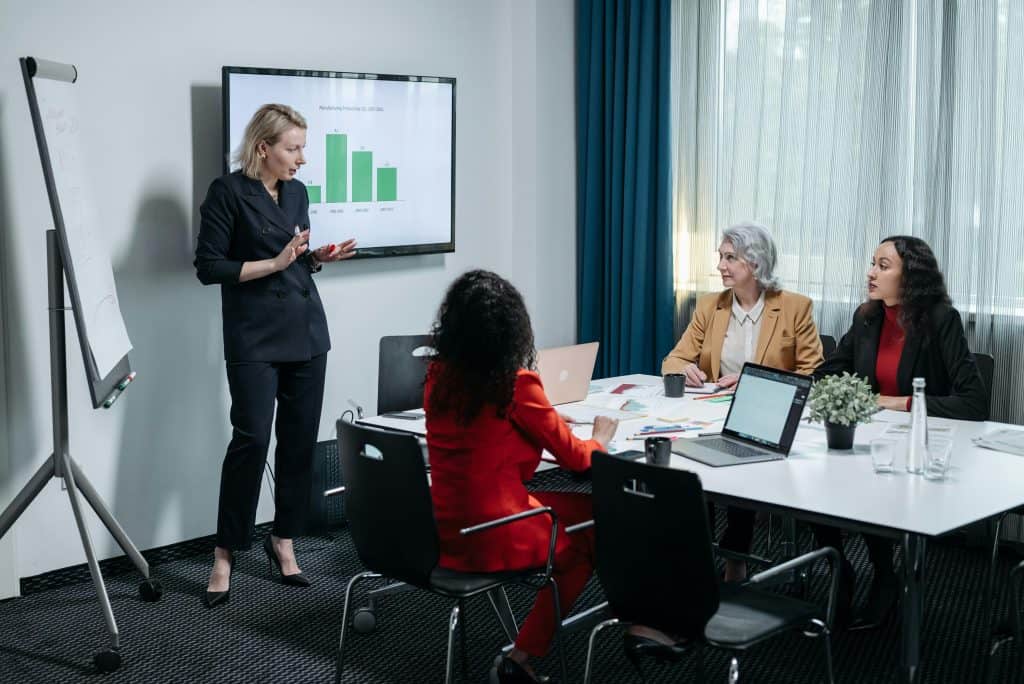
Monday morning starts with the familiar crush at the elevator bank, phones glowing, coffee cups tilting, calendar reminders stacking up before anyone reaches a desk. Office attendance keeps climbing, and a late-January 2026 reading of Kastle System’s 10-city Back to Work Barometer put weekly occupancy at 56.9%, a post-pandemic high that signals real momentum. The question inside that momentum carries more weight than any mandate: what makes the trip feel genuinely worth it?
Micah Remley, Chief Executive Officer at Robin, frames the moment clearly. Workplace platforms powered by AI can absorb the logistical coordination that office attendance requires, and that shift frees the office to deliver what home setups rarely match: faster alignment, richer collaboration, and shared energy. Leaders who treat AI as an experience upgrade, paired with intentional in-person time, create a workplace people choose.
Video: “How AI Can Make the Office Meaningful”
Podcast: “How AI Can Make the Office Meaningful”
AI Turns Office Time Into High-Intent Collaboration
AI creates value when it removes friction, and friction dominates modern workdays. Microsoft’s research on work patterns shows how coordination and meetings sprawl across time zones and into evenings, with late meetings rising 16% year over year in its infinite workday analysis. When teams carry that overload into the office, the building becomes a backdrop for inbox triage.
Remley argues that the office earns relevance when people arrive for work that benefits from proximity. Think whiteboards, rapid decisions, and creative collisions that accelerate a project from fuzzy to shipped. Workplace operations platforms that leverage AI support that outcome by handling the background labor that steals attention: scheduling, coordination, follow-up, and documentation.
Meeting overload offers a concrete example. Microsoft notes that since February 2020, weekly meeting time rose 252% for the average Teams user, and weekly meeting counts rose 153% in its hybrid meeting guidance. That escalation creates a simple operational opportunity: automate scheduling, capture, summarization, and action routing so in-person conversations stay focused on the decision, not the clerical residue.
Hybrid work research also points to a clear design target: structured in-person time paired with flexibility. A large hybrid study highlighted by Stanford found that two days remote per week sustained productivity and promotion rates while reducing quits, described in its hybrid work study. That kind of stability strengthens Remley’s point: office days carry the greatest payoff when teams engineer them around collaboration, then use AI to keep the collaborative flow intact.
Personalized Offices Win Talent Through Ease And Energy
Most return-to-office debates treat attendance as the goal. High-performing workplaces treat experience as the goal, and attendance follows, balancing flexibility with accountability to create the best of both worlds. Gallup describes the concept of a workplace value proposition: a commute carries a real cost, and Gallup cites a 27.6-minute average one-way commute, which adds up to weeks of time each year.
Remley’s answer to that cost focuses on personalization that removes hassle. The office feels compelling when it feels easy. Employees arrive with the right desk reserved, the right room reserved, and the right teammates present. Platforms such as AI-driven desk booking, room scheduling, and check-ins designed to streamline the in-office day, and that kind of streamlining matters more than leaders often admit. People show up when arrival feels frictionless and the day feels coherent.
Space design trends reinforce the same direction. CBRE explains that hybrid work requires a broader mix of space types that support focus, virtual collaboration, and in-person collaboration in hybrid workplace utilization. Gensler’s research focuses on measuring workplace performance and what contributes to high-performing offices in its Global Workplace Survey. Both perspectives point to a shared practical move: shift from desk-count thinking to experience-and-output thinking, with more flexible collaboration settings and fewer assumptions about assigned seating.
There is also a deeper reason personalization works: it protects presence. When people stop hunting for a room, negotiating a seat, or rescheduling because a key collaborator stayed home, they enter meetings with more attention available. Remley calls that out directly. AI handles the busywork that usually follows people into the conference room, and that enables genuine listening and sharper decisions.
Behavioral Science Clears The Biases Blocking AI-Enhanced Offices
A technology story alone rarely moves an organization. A leadership story moves it, and leadership decisions run through cognitive shortcuts. Remley observes a common pattern: leaders associate AI with cost cutting or headcount reduction, and they miss the practical gains from lowering distraction and raising the quality of time together.
Behavioral science offers a helpful lens here. Predictable thinking errors shape workplace decisions, and leaders can use that approach to design better choices about AI and office strategy. The first barrier comes from status quo thinking: leaders default to familiar playbooks such as blanket attendance rules because those rules feel controllable. The second barrier comes from narrow framing: leaders fixate on large language models as a developer tool and miss operational AI that improves scheduling, space usage, and meeting effectiveness. The third barrier comes from attentional bias: leaders see a software line item more easily than they see the cost of misalignment.
To address these, leaders need to deploy structured processes that force teams to weigh hidden costs and second-order effects. In the workplace context, that means leaders evaluate the full cost of friction, including lost collaboration and wasted meeting time.
Evidence for the value of proximity strengthens the case for investing in better in-person experiences. MIT Sloan summarizes research that links face-to-face interaction with measurable innovation outcomes, including knowledge spillovers and patent activity, in its face-to-face innovation analysis. That value helps leaders reframe the office as an innovation engine, then use AI as the system that keeps the engine running smoothly.
Implementation follows a simple sequence: start with friction, deploy AI-powered workplace operations into existing workflows, and measure results that employees feel in their day. Leaders can begin where coordination pain shows up most clearly, then deploy AI for scheduling, room allocation, transcription, and action tracking so teams spend office hours creating, deciding, and building relationships.
The modern office carries a fresh opportunity. AI gives people back their attention. Physical presence turns that attention into momentum. Leaders who combine both create office days that feel intentional, human, and professionally valuable, and that becomes a durable advantage in talent, engagement, and output.
Key Take-Away
AI removes friction so in-office time focuses on collaboration and decisions. Leaders who pair AI with intentional design make the office meaningful by turning presence into high-value, human, productive workdays. Share on XImage credit: Pavel Danilyuk/pexels
Dr. Gleb Tsipursky, called the “Office Whisperer” by The New York Times, helps tech-forward leaders stop overpaying for AI while boosting engagement and innovation. He serves as the CEO of the AI consultancy Disaster Avoidance Experts. Dr. Gleb wrote seven best-sell ing books, and his forthcoming book with Georgetown University Press is The Psychology of Generative AI Adoption (2026). His most recent best-seller is ChatGPT for Leaders and Content Creators: Unlocking the Potential of Generative AI (Intentional Insights, 2023). His cutting-edge thought leadership was featured in over 650 articles and 550 interviews in Harvard Business Review,Inc. Magazine,USA Today,CBS News,Fox News,Time,Business Insider,Fortune,The New York Times, and elsewhere. His writing was translated into Chinese, Spanish, Russian, Polish, Korean, French, Vietnamese, German, and other languages. His expertise comes from over 20 years of consulting,coaching, and speaking and training for Fortune 500 companies from Aflac to Xerox. It also comes from over 15 years in academia as a behavioral scientist, with 8 years as a lecturer at UNC-Chapel Hill and 7 years as a professor at Ohio State. A proud Ukrainian American, Dr. Gleb lives in Columbus, Ohio.