
AI Is Making the One-Person Creative Studio a Reality
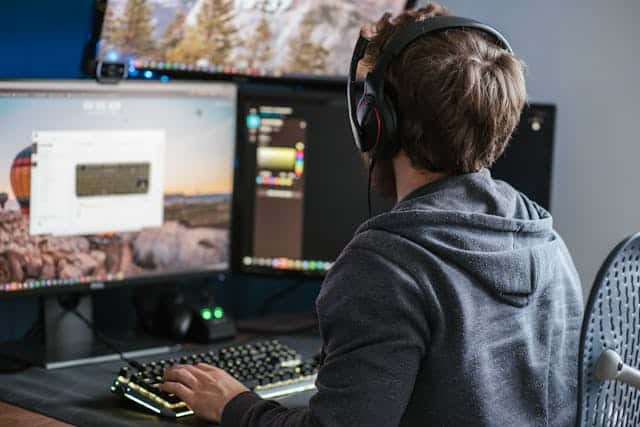
A creative director stares at a blank page at 8:07 a.m., coffee cooling beside a half-finished brief. Ten years ago, that page would have pulled in a crowd: copy, art, strategy, maybe a junior team to feed the room. Today, the room can fit in a laptop, and the first sparks arrive in seconds.
A massive new experiment from the University of Montreal points to a clear turning point: generative AI now beats the average person on certain creativity tests, even with older models such as GPT-4 that are over a year out of date. The implication for creative work feels immediate.
Video: “AI Is Making the One-Person Creative Studio a Reality”
Podcast: “AI Is Making the One-Person Creative Studio a Reality”
Older Models Already Match The Average Brainstorm
GPT-4 already performs strongly on structured idea-generation tasks, and the study’s scale makes that point hard to dismiss. Researchers compared leading systems to more than 100,000 people and found that some models exceeded average human scores on divergent linguistic creativity, using the Divergent Association Task. In plain terms, a machine can now produce plenty of original-feeling options on demand, especially when the task rewards variety and semantic distance.
That is exactly what many professionals ask for during early-stage ideation: names, angles, taglines, hooks, framing, counterpoints, and starting structures. An older model can flood the table with options, then your judgment selects the few that fit brand voice, audience reality, and business constraints. That workflow already compresses hours into minutes, and it shows up in everyday behavior. My recent LinkedIn poll, which captures more recent models, illustrates that reality: 70% of respondents reported their primary use case for gen AI as research, analysis, and brainstorming.”
The key shift for leaders sits inside that word “primary.” When brainstorming and related creative activities become the dominant use case, the tool is no longer a novelty. It becomes part of the operating system for creative work. Teams that once depended on a large volume of human draft labor start to depend on orchestration: prompt craft, iteration discipline, and a sharp creative brief. Indeed, the University of Montreal study showed that with better prompting and directions for the model, its creative output substantially improves. Creative leaders already tune humans by context and constraint. They will tune models the same way.
Newer Models Become True Creative Partners
Assistants generate options after direction. Partners push back, reframe, and expand the search space with you. Newer models move toward partnership because they sustain longer threads, track intent more reliably, and generate richer alternatives across formats. The study extends beyond word lists into creative writing tasks such as haiku, plot summaries, and short stories, and it still finds AI matching or exceeding average human work in some cases. That matters for professional output because modern creative rarely lives in a single lane. A campaign needs narrative, product truth, performance variants, visual direction, and platform adaptations.
Partnership also changes the emotional rhythm of creative work. The hardest part often involves momentum: the dead zone between the brief and the first compelling direction. A model that can generate ten plausible campaign territories, then remix the best three into sharper versions, keeps the creator moving. You provide taste, ethics, positioning, and audience empathy. The model provides relentless iteration. That pairing raises the “creative watts” per person.
The study also underscores a ceiling for older models where top human creativity stays ahead, especially on richer work like poetry and storytelling. In practice, that ceiling becomes a map of where human advantage concentrates. The premium shifts toward high-level concepting, tonal mastery, and the ability to connect a brand to culture with precision. Those skills resemble direction more than production. As models improve, the human role grows more like a showrunner than a room full of scriptwriters.
This is where staffing changes show up. A single creative lead equipped with multiple AI collaborators can cover territory that once required several specialists for first drafts. The work still calls for humans, yet the leverage per human rises. Fewer people can ship more finished creative, and that reality ripples through agencies and in-house studios.
The Creative Org Chart Shrinks And The Bar Rises
The Mad Men image of a packed room has always been partly theater. The real engine has been a small number of people who frame the problem well, spot the surprising angle, and shape the final artifact. AI makes that truth operational. Instead of assembling a full room to generate breadth, one person can simulate breadth through multiple model “personas,” each tuned to a role: contrarian strategist, emotional storyteller, ruthless editor, and audience advocate. The new creative team becomes a human lead plus an ensemble of AI brainstorming partners.
The study’s top-line pattern supports this future: average performance rises, yet peak human creativity stays distinctive, especially among the most imaginative participants. For professional readers, that translates into a simple career equation. Routine ideation and first-pass drafting become abundant. Taste, originality, and synthesis become scarce. Scarcity drives value.
Organizations will respond with new process design. A creative lead can run tighter loops: brief, generate, evaluate, refine, test, and ship. Fewer handoffs reduce drift. Brand consistency improves because the same director guides more output. Speed increases because iteration happens in minutes. Budget reallocates from headcount toward talent density, tooling, and review.
The practical challenge becomes governance: quality control, originality standards, and responsible use. Partnership demands a stronger brief, clearer constraints, and sharper review instincts. It also demands a human who understands audience reality, business goals, and brand stakes. AI can generate abundance; it cannot own accountability. The creative leader owns the call.
Creative work is entering an era of compression. Older models already handle much of the early ideation workload, and newer models accelerate toward true partnership. That combination boosts creative productivity so dramatically that a smaller number of creatives can cover more ground, with higher expectations for judgment and originality. The future looks less like a crowded bullpen and more like a single high-leverage creator running an AI-powered studio, shipping better ideas faster and setting a new standard for what “creative capacity” means.
Key Take-Away
AI is making creative work faster and leaner by turning brainstorming into an instant, AI-powered collaboration—shifting human value from drafting ideas to directing, refining, and applying original taste. Share on XImage credit: Anete Lusina/pexels
Dr. Gleb Tsipursky, called the “Office Whisperer” by The New York Times, helps tech-forward leaders stop overpaying for AI while boosting engagement and innovation. He serves as the CEO of the AI consultancy Disaster Avoidance Experts. Dr. Gleb wrote seven best-selling books, and his forthcoming book with Georgetown University Press is The Psychology of Generative AI Adoption (2026). His most recent best-seller is ChatGPT for Leaders and Content Creators: Unlocking the Potential of Generative AI (Intentional Insights, 2023). His cutting-edge thought leadership was featured in over 650 articles and 550 interviews in Harvard Business Review, Inc. Magazine, USA Today, CBS News, Fox News, Time, Business Insider, Fortune, The New York Times, and elsewhere. His writing was translated into Chinese, Spanish, Russian, Polish, Korean, French, Vietnamese, German, and other languages. His expertise comes from over 20 years of consulting, coaching, and speaking and training for Fortune 500 companies from Aflac to Xerox. It also comes from over 15 years in academia as a behavioral scientist, with 8 years as a lecturer at UNC-Chapel Hill and 7 years as a professor at Ohio State. A proud Ukrainian American, Dr. Gleb lives in Columbus, Ohio.