
The Real Return-To-Office Debate in Associations Is About Gen AI
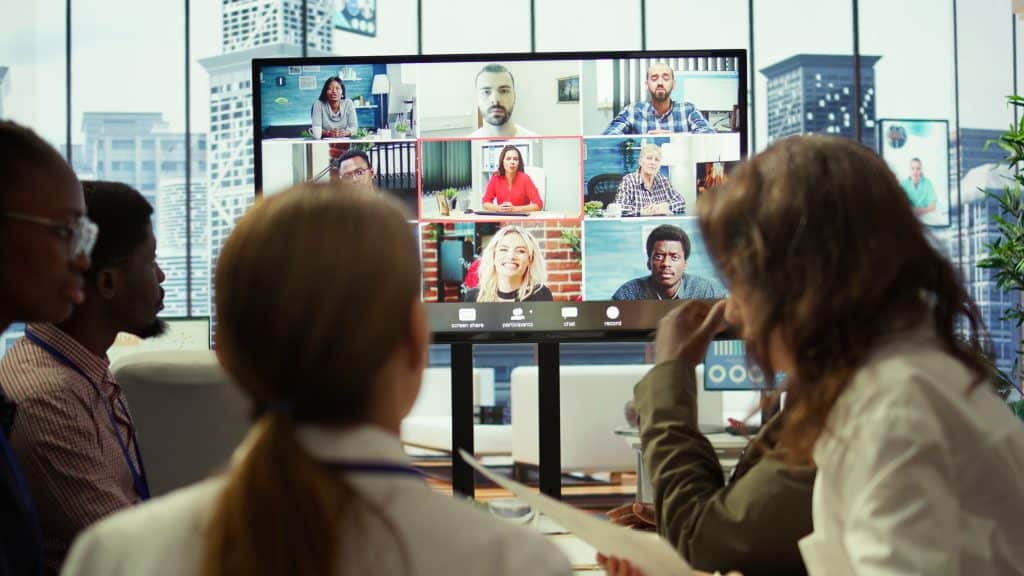
Picture a membership coordinator in Chicago resolving a complex credentialing query while a volunteer chapter chair in Austin updates event content and a policy lead in my hometown of Columbus drafts a standards brief, all before the East Coast lunch hour. The team never shares a building, yet the handoffs feel crisp. New evidence in the GoTo and Workplace Intelligence study, summarized in the Pulse of Work 2025, shows that 51 percent of employees expect offices to become obsolete over time and 62 percent prefer Gen AI-enhanced remote work. Leaders also signal urgency. Microsoft’s Work Trend Index 2024 reports that most executives see Gen AI as essential for competitiveness even as many lack a clear deployment plan. This article explains why Gen AI has moved flexible work from makeshift to mainstream, how to turn the gains into better member service, and where to invest next.
Video: “The Real Return-To-Office Debate in Associations Is About Gen AI”
Podcast: “The Real Return-To-Office Debate in Associations Is About Gen AI”
Gen AI Turns Location Into A Variable for Associations
The office no longer holds a monopoly on coordination. Weekly swipe data in the Back to Work Barometer show national occupancy around half-full, with Tuesday peaks and Friday troughs that reflect intentional scheduling instead of identical on-site weeks. Independent economists reach a similar conclusion. Harmonized estimates in Measuring Work From Home put remote work at roughly a quarter of paid days in 2025, far above pre-2020 norms.
Gen AI accelerates this pattern by shrinking the distance between people, systems, and institutional knowledge. The GoTo Pulse of Work 2025 finds majorities saying Gen AI increases flexibility, preserves productivity anywhere, and improves remote service to constituents. Support for continued investment is strong, with 95 percent of employees and 92 percent of IT leaders endorsing current or increased spend. Inside core productivity suites, the Microsoft Work Trend Index documents widespread usage of generative tools and broad executive belief that adoption is now table stakes.
For associations, treating location as a variable means redesigning staff and volunteer workflows around digital-first collaboration. National offices can concentrate on policy, standards, and governance while chapters execute local programs. Sections and member affinity groups can run asynchronous working groups that rely on Gen AI to summarize meetings, index documents, and route tasks to the right people. The practical result is a steadier cadence of deliverables with fewer mandatory office days.
Member Experience And Productivity Travel
Members expect speed, clarity, and empathy, not a street address. Gartner’s agentic AI forecast projects that by 2029 autonomous agents will resolve most routine service issues and reduce operating costs materially. That trend favors distributed teams that already route and triage work digitally. Service leaders are responding. The latest CX Trends 2025 shows organizations leaning into Gen AI at scale, with leaders expecting competitive advantage from intelligent triage and self-service.
Worker sentiment aligns with these operational signals. The Work Trend Index finds heavy adoption of Gen AI among knowledge workers and a leadership gap on enablement, which creates urgency for training and guardrails. Retention risk also enters the equation. A 2025 Pew Research analysis reports that many remote-capable employees would be unlikely to stay if forced back full-time. Associations that push location mandates without a performance rationale risk losing scarce skills in member services, credentialing, standards development, and events.
Translate this to daily operations. A Gen AI help desk can field routine membership requests, pre-populate answers with policy excerpts, and escalate complex questions with context attached. Meeting assistants can auto-tag action items across board, chapter, and section meetings, then push summaries into the knowledge base. Content teams can use retrieval-augmented tools to draft practice advisories sourced from existing guidelines, with human reviewers accountable for final accuracy. These workflows travel well, which means staff and volunteers can contribute from anywhere without degrading service quality.
Invest In Platforms, Guardrails, And Chapters
Budgets telegraph priorities. In the GoTo Pulse of Work 2025, 61 percent of employees want companies to prioritize Gen AI at least as much as office amenities, and the same share say Gen AI would lift productivity and engagement more than perks. Public data confirm that flexible arrangements are now embedded. The U.S. Bureau of Labor Statistics summarizes broad telework trends across occupations in 2024, reinforcing hybrid as a mainstream choice.
Good investment is not only tools. Governance matters. The NIST AI RMF 1.0 offers a practical way to structure risk management and trustworthiness, while the ISO 42001 standard sets requirements for an AI management system that auditors can assess. These frameworks help associations model responsible practice for their fields while protecting their own data, brand, and members.
Consider a typical engagement from my consultancy. A mid-sized association with about 60,000 members, 40 chapters, and several demographic sections asked for help using AI for modernizing service and standards work.
We began with a discovery sprint to map high-volume requests, policy sources, and privacy constraints. The team implemented a Gen AI member assistant with retrieval over policies, codes, and FAQs, a meeting-summary pipeline tied to the knowledge base, and a volunteer onboarding copilot for chapter leaders. We embedded governance with a single data catalog, role-based permissions, and human-in-the-loop review at each step, aligned to the AI RMF 1.0 functions and a roadmap toward ISO 42001 readiness. Within one quarter, first-response time for member emails dropped by double digits, chapter leaders reported faster turnaround on event collateral, and the standards committee shipped a revised practice advisory two weeks sooner than the prior cycle.
The upside is significant at organizational scale. McKinsey estimates multitrillion-dollar annual value from generative tools in its analysis of generative AI value, with large gains in customer service, sales, and software. Associations tap similar value by treating members as customers, programs as products, and chapters as distributed delivery networks. The operating pattern becomes predictable: fund the Gen AI stack, tune the workflows, measure outcomes, and gather in person for trust-building, training, and moments that truly benefit from co-location.
Conclusion
Flexible work has matured into a system. Gen AI now coordinates tasks, surfaces knowledge, routes service, and personalizes engagement without caring which badge reader you pass in the morning. Offices still matter for targeted gatherings, yet they no longer define where value gets created. The strongest evidence tells association leaders to invest where the work actually happens, which is increasingly inside software that travels with every staff member and volunteer. Put resources into platforms and governance, build skills for staff and chapter leaders, and make location serve the mission rather than dictate it.
Key Take-Away
The return-to-office debate in associations is no longer about place—it’s about performance. Gen AI makes flexible work mainstream, boosting productivity, retention, and member service when associations invest in digital-first workflows and… Share on XImage credit: DC Studio/freepik
Gleb Tsipursky, PhD, serves as the CEO of the future-of-work consultancy Disaster Avoidance Experts and wrote The Psychology of Generative AI Adoption (2026) and ChatGPT for Leaders and Content Creators (2023)