
AI That Earns The Commute For Associations
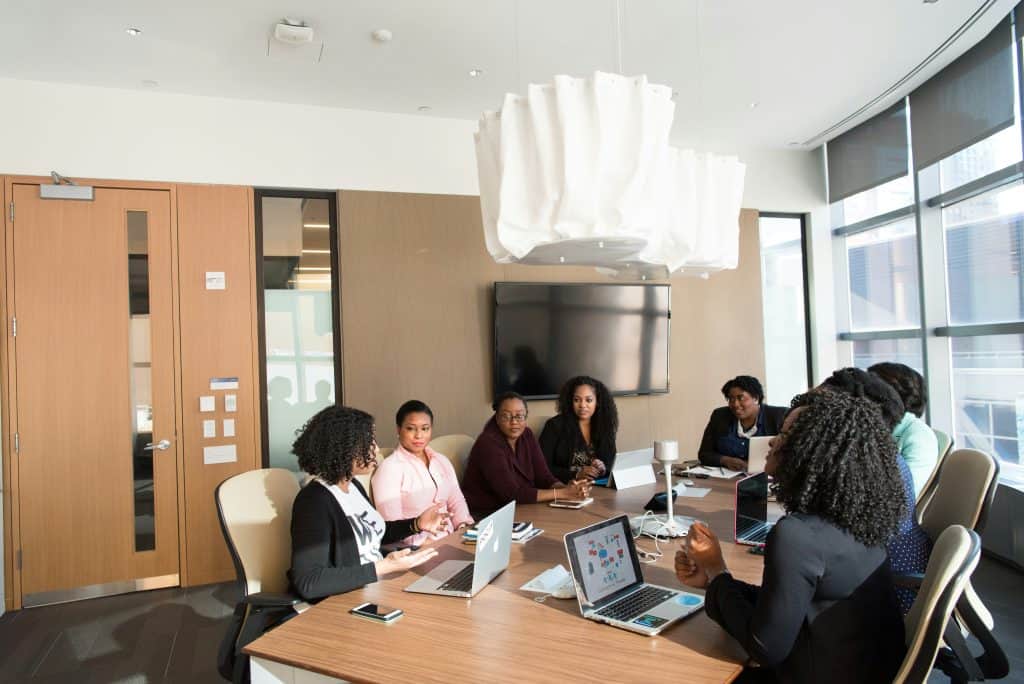
Monday morning for association teams feels familiar: an elevator queue, calendar pings, and a sprint to claim a decent room for a committee call that somehow became a hybrid meeting. Office attendance keeps rising, and recent occupancy data shows weekly averages reaching the mid-50% range as organizations settle into predictable patterns. For associations, that momentum raises a sharper question than “How many days?” The question becomes “What happens in the building that advances the mission, strengthens member value, and justifies the time and cost of showing up?”
AI can make that answer concrete. Micah Remley, Chief Executive Officer at Robin, notes that when leaders use AI to remove coordination drag, the office becomes a place for decisions, learning design, advocacy alignment, sponsor stewardship, and the kind of trust-building that powers volunteer leadership. Associations that pair AI-supported operations with intentional in-person rhythms create office days people choose because the day delivers professional meaning.
Video: “AI That Earns The Commute For Associations”
Podcast: “AI That Earns The Commute For Associations”
AI Turns Office Time Into High-Intent Member Value Work
Association work creates relentless coordination: board packets, committee workflows, chapter leader check-ins, program faculty prep, sponsor deliverables, and policy rapid response. Digital tools helped, then meeting volume surged. Microsoft’s hybrid guidance reports that since February 2020, average weekly meeting time rose 252% and weekly meeting counts rose 153% for Teams users. Microsoft’s infinite workday analysis adds another stress signal: meetings starting after 8 p.m. rose 16% year over year.
When that sprawl follows staff into the office, the building turns into a louder inbox. AI earns its keep by absorbing the “glue work” that drains attention: scheduling across staff and volunteers, agenda drafting, note capture, task routing, and follow-up reminders. For a governance-heavy organization, that means faster board action because packets assemble cleanly and action items route to owners immediately. For credentialing and education teams, it means faster faculty coordination and cleaner course documentation, with accessibility checks for captions, transcripts, and formatting aligned to program standards.
The operational move matters as much as the technology. Treat the office as the place for work that benefits from proximity: board deliberation, cross-functional program design, policy war rooms, and sponsor solution sessions. Use AI to keep everything around those moments running in the background. The payoff shows up in member-facing outputs: better-positioned advocacy asks, tighter conference programs, clearer credential maintenance guidance, and faster responses to chapters.
Personalized Offices Strengthen Chapters, Events, And Sponsor Outcomes
Association leaders often frame office presence around culture. Members experience culture through service quality, event excellence, and leadership trust. That starts with time. The U.S. Census Bureau reported a 27.6-minute average one-way commute in 2019 in its commute data. When the day begins with room hunting and rescheduling, that commute feels expensive.
AI-supported workplace operations make the day coherent. Staff arrive with a reserved desk near project partners, a room that fits the meeting format, and a schedule that respects volunteer availability. When chapters join the picture, coordination becomes a brand and data issue. A shared system can enforce consistent naming, signage, and room setup standards across HQ and component offices, while allowing local leaders to see what matters: who will be onsite, what collaboration spaces exist, and how to route questions back to HQ.
Space strategy supports this shift. CBRE’s hybrid workplace report emphasizes an expanded mix of space types for focus, virtual collaboration, and in-person collaboration. Gensler’s workplace research focuses on measuring what drives high-performing offices. For associations, “high-performing” means rooms that serve committee work, learning production, sponsor activation planning, and member experience design.
Conference teams can translate the same logic into events. AI can help build scheduling logic for speaker prep, internal run-of-show coordination, and post-event learning workflows, including session summaries and CE documentation that respects privacy and permissions. Sponsor value rises when staff time shifts from coordination to relationship work: curated introductions, tighter deliverables, and faster post-event reporting tied to sponsor outcomes.
Case Study: National Credentialing Association With Distributed Chapters
A national manufacturing association hired me after a return-to-office push created friction between HQ staff and chapter leaders. Committee calendars collided, meeting notes lived in personal files, and the education team spent hours chasing approvals for course updates and exam maintenance. Leaders wanted office days to deliver faster decisions and higher volunteer satisfaction, since both drive renewal and participation.
I started by mapping friction across governance, chapters, and events, then paired that map with a light governance layer: an AI use policy, a privacy and retention standard for recordings, and accessibility requirements for summaries and transcripts. We implemented AI-supported meeting capture and action routing, plus a shared scheduling and space workflow that aligned HQ and chapter leadership. We also set brand rules for chapter-facing communications and templates, so local leaders stayed consistent while retaining the flexibility they need.
Within 90 days, the association cut internal meeting follow-up time by 35% and reduced “reschedule churn” for volunteer meetings by 22%, freeing staff capacity for sponsor stewardship and member communications. Conference planning also improved: programming decisions moved earlier, and post-event learning assets published faster because session documentation flowed into the LMS workflow. The lesson for any association is straightforward: treat AI as operational infrastructure that protects human attention, then design office days around the moments that create member value and leadership trust.
Conclusion
Meaningful office time comes from intentional proximity paired with operational ease. AI creates the ease by taking on coordination tasks that consume staff capacity and volunteer goodwill. The office then becomes a setting for governance that moves, programs that improve, advocacy that aligns quickly, and events that feel tighter for members and sponsors.
Associations already understand value exchange. Members renew when they feel progress, community, and professional lift. AI-enabled office design supports that exchange by giving teams back time, attention, and clarity, then channeling those gains into the work that only people together can do.
Key Take-Away
AI can transform office time and make in-person work more meaningful and mission-driven by removing coordination work, enabling teams to focus on high-value collaboration, faster decisions, and stronger member outcomes. Share on XImage credit: wocintechchat/unsplash
Dr. Gleb Tsipursky, called the “Office Whisperer” by The New York Times, helps tech-forward leaders stop overpaying for AI while boosting engagement and innovation. He serves as the CEO of the AI consultancy Disaster Avoidance Experts. Dr. Gleb wrote seven best-selling books, and his forthcoming book with Georgetown University Press is The Psychology of Generative AI Adoption (2026). His most recent best-seller is ChatGPT for Leaders and Content Creators: Unlocking the Potential of Generative AI (Intentional Insights, 2023). His cutting-edge thought leadership was featured in over 650 articles and 550 interviews in Harvard Business Review, Inc. Magazine, USA Today, CBS News, Fox News, Time, Business Insider, Fortune, The New York Times, and elsewhere. His writing was translated into Chinese, Spanish, Russian, Polish, Korean, French, Vietnamese, German, and other languages. His expertise comes from over 20 years of consulting, coaching, and speaking and training for Fortune 500 companies from Aflac to Xerox. It also comes from over 15 years in academia as a behavioral scientist, with 8 years as a lecturer at UNC-Chapel Hill and 7 years as a professor at Ohio State. A proud Ukrainian American, Dr. Gleb lives in Columbus, Ohio.